

The Story of an Hour: A Comprehensive Analysis
Kate Chopin’s impactful short story, readily available as a PDF download, explores themes of freedom and repression. Numerous online resources offer access to “The Story of an Hour,” facilitating study and analysis of its poignant narrative.
Kate Chopin (1850-1904) was a prolific American novelist and short story writer, now celebrated for her unflinching exploration of female identity and societal constraints in the 19th century. Initially overlooked, her literary reputation experienced a significant revival in the latter half of the 20th century, largely due to feminist literary criticism. Chopin’s work often challenged conventional norms surrounding marriage, motherhood, and female sexuality, themes considered radical for her time.
While she authored novels like “At Fault” and “The Awakening,” it’s her short stories, particularly “The Story of an Hour,” that have secured her lasting legacy. This concise yet powerful narrative, frequently found as a PDF download online, encapsulates Chopin’s signature style – a subtle yet penetrating examination of a woman’s inner life. The story’s enduring appeal lies in its ability to provoke thought about the complexities of freedom, desire, and the suffocating expectations placed upon women.
Accessing “The Story of an Hour” in PDF format allows for convenient study and analysis of Chopin’s masterful prose and thematic depth. Her work continues to resonate with readers today, prompting ongoing discussions about gender roles and individual autonomy.
Historical Context of “The Story of an Hour” (1894)
“The Story of an Hour,” published in 1894, emerged from a specific socio-cultural landscape that profoundly shaped Kate Chopin’s narrative. The late 19th century witnessed rigid societal expectations for women, largely confined to the domestic sphere and defined by their roles as wives and mothers. Legal and economic limitations further restricted their independence, reinforcing patriarchal structures.
Marriage was often viewed as a practical arrangement, prioritizing social status and financial security over personal fulfillment. Women had limited agency in choosing their partners and were expected to prioritize their husbands’ needs above their own. This context is crucial for understanding Louise Mallard’s internal conflict and her surprising reaction to the news of her husband’s supposed death.
The story’s subversive exploration of female desire and autonomy was considered controversial for its time. Finding the text as a readily available PDF allows modern readers to appreciate the boldness of Chopin’s critique. It challenged prevailing Victorian ideals and foreshadowed the burgeoning feminist movements of the 20th century, making it a significant piece of American literary history.
The Initial News of Brently Mallard’s Death
The narrative of “The Story of an Hour” commences with the delicate conveyance of devastating news: Brently Mallard has perished in a railroad disaster. This information is delivered with utmost care to Louise Mallard, who suffers from a diagnosed “heart trouble.” Chopin emphasizes the deliberate cushioning of the announcement, highlighting the concern for Louise’s fragile physical state.
The news is initially brought by Louise’s sister, Josephine, and her husband, Richards. Their cautious approach underscores the societal anxieties surrounding emotional distress, particularly for women perceived as delicate. The story, easily accessible as a PDF, details how the news is relayed indirectly, aiming to mitigate the shock’s potential impact on Louise’s heart condition.
This initial scene establishes a tone of suppressed emotion and foreshadows the story’s exploration of societal constraints. The careful handling of the news ironically sets the stage for Louise’s unexpected and liberating response, revealing the complexities beneath the surface of Victorian propriety. The initial shock is merely the catalyst for a profound internal awakening.
Louise Mallard’s Heart Condition and the Concern of Others
Throughout “The Story of an Hour,” readily available as a PDF, Louise Mallard’s “heart trouble” serves as a recurring motif and a central concern for those around her. This pre-existing condition isn’t merely a physical ailment; it symbolizes her repressed emotional life and the constraints imposed upon her by societal expectations.
Josephine and Richards demonstrate considerable anxiety regarding Louise’s well-being, meticulously shielding her from what they perceive as potentially harmful news. Their concern, while seemingly compassionate, also reflects the prevailing belief that women were inherently fragile and susceptible to emotional collapse. This concern dictates their cautious delivery of Brently’s supposed death.
Chopin utilizes Louise’s heart condition to highlight the suffocating nature of her marriage and the broader societal pressures placed upon women in the 19th century. The fear of exacerbating her physical ailment underscores the limited agency afforded to Louise, effectively trapping her within a cycle of repression and vulnerability. It’s a physical manifestation of her emotional imprisonment.
The Significance of the Open Window
In Kate Chopin’s “The Story of an Hour,” accessible in PDF format online, the open window assumes a pivotal symbolic role, representing Louise Mallard’s burgeoning sense of freedom and the possibilities that lie beyond her constrained existence. It’s a visual portal to a world previously inaccessible to her.
The window offers a vista of vibrant life – trees, birds, scents – contrasting sharply with the stifling atmosphere of her home and marriage. This external world symbolizes the independence and self-discovery Louise begins to experience upon believing her husband is dead. The sights and sounds filtering through the window awaken her senses and ignite a newfound hope.
Chopin masterfully uses the window to illustrate Louise’s internal transformation. As she gazes outward, she envisions a future unburdened by marital obligations, a future where she can live authentically and pursue her own desires. The open window isn’t simply a physical feature; it’s a gateway to liberation and self-realization, a powerful emblem of her awakening.
Louise’s Retreat to Her Room
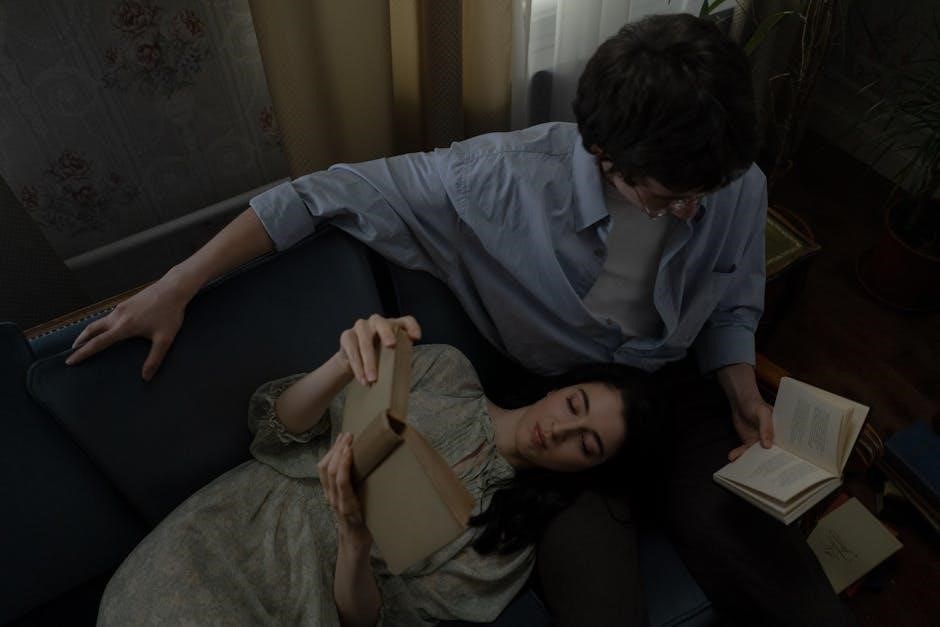
Following the news of Brently Mallard’s supposed death, as detailed in the widely available PDF of Kate Chopin’s “The Story of an Hour,” Louise Mallard seeks solace in her private chamber. This retreat isn’t merely a physical withdrawal; it’s a crucial step in her psychological unraveling and eventual awakening.
Louise’s request to be alone signifies her need to process the news without the constraints of societal expectations or the well-meaning, yet suffocating, concern of others. Her room becomes a sanctuary, a space where she can confront her emotions without judgment or interruption. It’s within these four walls that she begins to grapple with the complex feelings stirred by her husband’s reported demise.
The act of retreating allows Louise to disconnect from the external world and turn inward, initiating a journey of self-discovery. This isolation is essential for her to acknowledge and embrace the unexpected sense of freedom that blossoms within her, a freedom previously suppressed by the conventions of 19th-century marriage.
The Awakening of a New Sense of Freedom
Within the confines of her room, as depicted in Kate Chopin’s “The Story of an Hour” – easily accessible as a PDF – Louise Mallard experiences a profound emotional shift. Initially overwhelmed by grief, she gradually becomes aware of a burgeoning sense of liberation. This isn’t a callous disregard for her husband, but a realization of the autonomy she has long been denied.
The story details how Louise recognizes that her life, though seemingly comfortable, has been defined by the expectations and limitations imposed upon her as a wife. The prospect of independence, previously unimaginable, now fills her with a thrilling, almost intoxicating, joy. She begins to envision a future unburdened by duty and obligation, a future where she can live for herself.
This awakening isn’t presented as a sudden epiphany, but as a slow, dawning realization. It’s a quiet revolution within her soul, fueled by the unexpected opportunity to forge her own path. The story powerfully illustrates the stifling nature of societal norms and the yearning for self-determination.
Repetition of “Free, Free, Free!” – A Key Motif
The insistent repetition of “Free, Free, Free!” in Kate Chopin’s “The Story of an Hour,” widely available as a PDF, serves as a central and potent motif. This refrain, whispered repeatedly by Louise Mallard, isn’t merely an expression of relief at escaping grief, but a powerful articulation of her newfound desire for autonomy and self-possession.
The echoing of the word “free” underscores the depth of Louise’s suppressed longings. It represents a liberation from the constraints of marriage and societal expectations that have defined her existence. Each repetition intensifies the emotional impact, revealing the intoxicating allure of a life lived on her own terms.
Chopin’s deliberate use of this motif highlights the story’s central theme: the struggle for female independence in a patriarchal society. The simplicity of the phrase belies its profound significance, encapsulating Louise’s yearning for a life free from obligation and control. It’s a visceral expression of her awakening consciousness and a testament to the power of self-discovery.
Exploring the Theme of Marital Constraints

“The Story of an Hour” by Kate Chopin, easily accessible as a PDF, profoundly explores the stifling nature of marital constraints experienced by women in the 19th century. The narrative subtly critiques the societal expectations that relegated women to roles of dependence and subservience within marriage.
Louise Mallard’s initial grief over her husband’s supposed death quickly transforms into a realization of the freedom his absence offers. This isn’t presented as a rejection of Brently himself, but rather a rejection of the institution of marriage and the limitations it imposed upon her individuality. The story suggests that even a kind and considerate husband could unknowingly contribute to a wife’s sense of confinement.
Chopin masterfully illustrates how marriage, while intended to provide companionship and security, could also become a form of subtle oppression. Louise’s joy stems not from escaping a cruel husband, but from escaping the very idea of being possessed and controlled. The PDF version allows close examination of Chopin’s nuanced portrayal of these societal pressures and their psychological impact.
The Irony of Louise’s Suppressed Desires
Kate Chopin’s “The Story of an Hour,” widely available as a PDF, is steeped in dramatic irony, particularly concerning Louise Mallard’s suppressed desires. The initial assumption – that Louise is devastated by her husband’s death – is immediately undercut by her internal reaction, a burgeoning sense of liberation.
The story’s power lies in the contrast between societal expectations and Louise’s true feelings. She is expected to mourn, and outwardly appears to do so, yet inwardly she celebrates the prospect of independence. This duality highlights the constraints placed upon women, forcing them to conceal their authentic selves and desires.
The ultimate irony, of course, is Louise’s death upon Brently’s return. Diagnosed as dying of “joy that kills,” the doctors misinterpret her true cause of death: the crushing disappointment of losing her newfound freedom. The PDF format allows for careful re-reading, revealing the subtle clues Chopin provides regarding Louise’s hidden longings and the tragic consequences of their suppression.
The Nature of Repression in 19th-Century Marriage
Kate Chopin’s “The Story of an Hour,” easily accessible as a PDF, offers a scathing critique of 19th-century marriage and the societal repression inherent within it. The story vividly portrays how marriage, rather than a union of equals, often functioned as a form of control, particularly over women.
Louise Mallard’s internal monologue, revealed in the story’s brief timeframe, exposes the stifling nature of her marriage. She doesn’t lament the loss of love, but the loss of autonomy. The PDF allows readers to closely examine Chopin’s language, noting how she subtly depicts the erosion of self within the confines of marital expectations.

The story suggests that women were expected to sacrifice their individuality and desires for the sake of fulfilling their roles as wives and mothers; This repression wasn’t necessarily malicious, but rather a deeply ingrained societal norm. Louise’s “heart trouble” can be interpreted as a metaphor for the emotional strain caused by this constant suppression, ultimately leading to her tragic demise.
The Psychological Impact of Societal Expectations
Kate Chopin’s “The Story of an Hour,” widely available as a PDF, powerfully illustrates the devastating psychological impact of rigid societal expectations on women in the 19th century. The narrative demonstrates how these expectations could lead to internal conflict and a profound sense of alienation.
Louise Mallard’s reaction to the news of her husband’s supposed death isn’t one of grief, but of a burgeoning sense of freedom. This reveals the extent to which she felt constrained by her marriage and the societal role assigned to her. The PDF format allows for detailed analysis of her emotional journey, highlighting the subtle shifts in her perception.
The story suggests that women were conditioned to prioritize their identities as wives and mothers above all else, suppressing their own desires and ambitions. This constant pressure to conform could lead to a disconnect between their true selves and the personas they presented to the world. Louise’s ultimate demise isn’t caused by joy, but by the crushing realization that her newfound freedom has been snatched away, a testament to the suffocating power of societal norms.

The Brief Moment of Joy and Self-Discovery
Within Kate Chopin’s “The Story of an Hour,” accessible in PDF format, Louise Mallard experiences a fleeting but profound moment of joy and self-discovery upon believing her husband is deceased. This isn’t a celebration of his death, but a recognition of the freedom she anticipates – a life lived for herself, unbound by marital expectations.
Retreating to her room, Louise gazes out the window, observing the vibrant spring landscape, a symbol of renewal and possibility. She repeatedly whispers “free, free, free!” – a key motif emphasizing her awakening consciousness. The PDF allows close examination of this pivotal scene, revealing the intensity of her emotional release.
This moment represents a radical departure from the societal norms of the time, where a woman’s identity was largely defined by her husband. Louise’s joy stems from the prospect of autonomy, of making her own choices and pursuing her own desires. It’s a brief glimpse into a life she never dared to imagine, a life where she could be the mistress of her own fate, before societal constraints tragically intervene.
The Return of Brently Mallard – A Shocking Twist
The climax of Kate Chopin’s “The Story of an Hour,” readily available as a PDF, delivers a devastating and ironic twist: Brently Mallard unexpectedly returns home, very much alive. This event shatters Louise’s newfound sense of freedom and self-discovery, abruptly ending her brief moment of joyful anticipation.
The narrative, easily followed in the PDF version, details how Brently was merely a passenger involved in a railroad accident, escaping unharmed. His arrival, witnessed by Josephine and Richards, is presented as a conventional happy ending – a husband returning to his wife. However, for Louise, it represents the crushing return of the very constraints she had just escaped in her mind.

This shocking reversal underscores the story’s central theme of repression and the limitations placed upon women in 19th-century society. The PDF allows readers to analyze the stark contrast between the expectations of a joyful reunion and the tragic reality of Louise’s emotional state, setting the stage for the story’s final, heartbreaking irony.
The Doctors’ Diagnosis of “Joy That Kills”
Following Louise Mallard’s death upon seeing her husband, Brently, alive, the attending physicians deliver a chilling diagnosis: “joy that kills.” This pronouncement, central to understanding Kate Chopin’s “The Story of an Hour” – easily accessible as a PDF – is presented as a straightforward medical explanation for her demise. However, the story, readily available for download, subtly challenges this simplistic interpretation.
The PDF reveals that the doctors, representing the societal norms of the time, fail to grasp the true cause of Louise’s death. They attribute it to an overwhelming surge of happiness, unable to comprehend the complex emotions at play. This misdiagnosis highlights the story’s critique of a patriarchal society’s inability to understand a woman’s inner life and desires.
A close reading of the PDF demonstrates that Louise did not die from joy, but rather from the devastating disappointment of losing her newfound freedom. The doctors’ diagnosis serves as a powerful example of societal blindness and the tragic consequences of repressed emotions, making the story a poignant commentary on 19th-century marriage.

The True Cause of Louise’s Death: Disappointment, Not Joy

Contrary to the doctors’ pronouncement of “joy that kills,” as presented in Kate Chopin’s “The Story of an Hour” – widely available as a PDF – Louise Mallard’s death stems from profound disappointment, not elation. The PDF reveals her brief experience of freedom, envisioned after believing her husband dead, was abruptly shattered by Brently’s unexpected return.
The story, easily downloaded, meticulously details Louise’s awakening to a life of self-possession, a liberation from the constraints of marriage. This newfound independence, cherished during her short retreat, is far more valuable than any marital joy. The shock of Brently’s presence doesn’t trigger happiness, but rather the crushing realization that her freedom is lost.
Analyzing the PDF, it becomes clear that Louise’s “heart trouble” isn’t a physical ailment exacerbated by joy, but a symbolic representation of her spirit broken by the return of her oppressor. The doctors’ misdiagnosis underscores the societal inability to recognize a woman’s desire for autonomy, making her death a tragic consequence of repressed longing.

Analyzing the Narrative Structure and Point of View

Kate Chopin’s “The Story of an Hour,” accessible in PDF format, employs a tightly controlled third-person limited point of view, focusing almost exclusively on Louise Mallard’s internal experience. This narrative choice, evident in the readily available PDF versions, allows readers intimate access to her evolving emotions and thoughts, heightening the story’s dramatic irony.
The narrative structure is remarkably concise, unfolding within a single hour – a timeframe emphasized throughout the story and easily observed when reading the PDF. This compressed timeline intensifies the emotional impact, mirroring the swiftness with which Louise’s perceptions shift from grief to liberation and ultimately, to despair.
Chopin masterfully utilizes foreshadowing, particularly through references to Louise’s “heart trouble,” which, as the PDF reveals, is tragically misinterpreted. The story’s abrupt ending, a shocking twist, reinforces the theme of societal constraints and the fragility of individual freedom. The limited perspective prevents a full understanding of the external world, emphasizing Louise’s subjective reality.
Symbolism in “The Story of an Hour” (Window, Heart Trouble, Spring)
Kate Chopin’s “The Story of an Hour,” widely available as a PDF, is rich in symbolism. The open window, a central image in the PDF text, represents Louise Mallard’s newfound freedom and the possibilities that lie beyond her constrained marriage. It’s a portal to a world she’s been denied, offering a glimpse of vibrant life.
Louise’s “heart trouble,” repeatedly mentioned throughout the story and detailed in the PDF, functions as a complex symbol. Initially presented as a physical ailment, it ultimately signifies her emotional repression and the societal pressures that contribute to her demise. The doctors’ misdiagnosis of “joy that kills” underscores this irony.
The story’s setting during springtime, as highlighted in the PDF version, symbolizes renewal and rebirth. This seasonal imagery contrasts sharply with Louise’s initial grief, foreshadowing her awakening and the potential for a new beginning. However, this hope is tragically extinguished, emphasizing the destructive power of societal expectations. These symbols, readily apparent in the PDF, deepen the story’s thematic resonance.
Critical Reception and Feminist Interpretations
Initially, Kate Chopin’s “The Story of an Hour,” accessible in PDF format, received a muted critical response. Published in 1894, its radical exploration of female desire and marital dissatisfaction challenged prevailing societal norms. However, the story experienced a significant revival in the latter half of the 20th century, coinciding with the rise of second-wave feminism.
Feminist critics, analyzing the PDF text, lauded Chopin’s portrayal of Louise Mallard’s awakening as a powerful indictment of patriarchal structures. The story became a cornerstone of feminist literary analysis, celebrated for its depiction of a woman’s yearning for autonomy and self-discovery. The PDF allows for close textual examination of these themes.
Interpretations focus on the constraints imposed upon women in the 19th century and the psychological toll of societal expectations. The tragic irony of Louise’s death—attributed to “joy” when it was, in fact, disappointment—is seen as a scathing commentary on the limited options available to women. The readily available PDF continues to fuel scholarly debate and feminist readings.
Availability of “The Story of an Hour” in PDF Format
“The Story of an Hour” by Kate Chopin is remarkably accessible in PDF format, facilitating widespread study and analysis. Numerous online platforms offer free PDF downloads, making the text readily available to students, researchers, and general readers. Websites dedicated to classic literature frequently host the story as a downloadable PDF file.
Searching online for “The Story of an Hour Kate Chopin PDF” yields a plethora of results, including links to educational institutions, digital libraries, and literary archives. These PDF versions often include introductory notes, critical essays, or biographical information about Chopin, enhancing the reading experience.
The ease of access to the PDF format allows for convenient portability and offline reading. Students can easily download and annotate the text for classroom assignments. Furthermore, the digital format supports text-based searches, enabling efficient exploration of key themes and motifs within Chopin’s concise yet powerful narrative; The story’s enduring popularity is reflected in its ubiquitous availability as a PDF.